Loading
24/07/2024
The principle of "Operability"


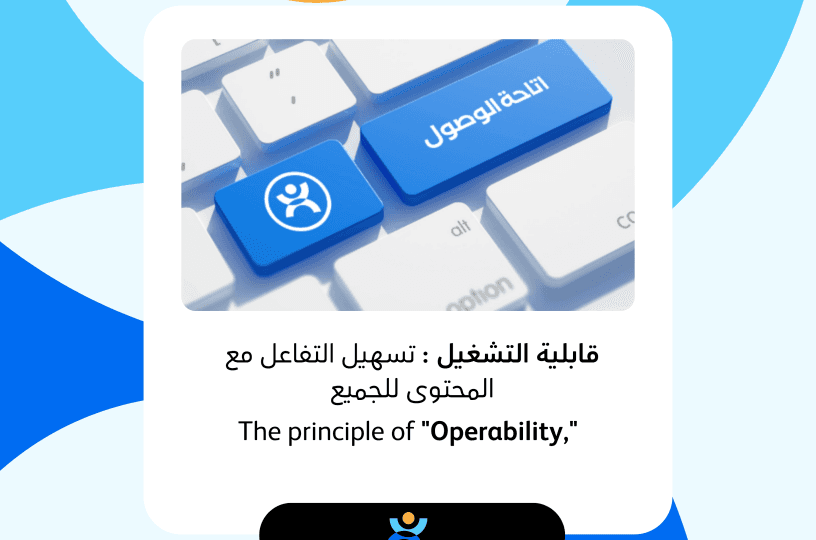
Ensuring that web content is easily and efficiently operable for everyone is essential. The principle of "Operability," one of the foundational principles of the Web Content Accessibility Guidelines (WCAG), dictates that users must be able to navigate and interact with content using various technologies, including assistive technologies. In this article, we will review how the features of the Muneer tool achieve this principle, enhancing user experience and ensuring compliance with WCAG 2.1 standards.
Concept of Operability
The concept of "Operability" refers to the necessity for users to navigate and interact with web content in various ways, including using assistive technologies such as keyboards and other input devices. This principle includes ensuring that all content functions are available via keyboard without the need for a mouse, and that the content is easy to navigate and understand.
Key Features for Achieving Operability in the Muneer Tool
Keyboard Navigation: Enabling Full User Control
One of the standout features of the Muneer tool is the ability to navigate using the keyboard, essential for users who cannot use a mouse. Full Keyboard Navigation: Muneer allows users to navigate the site and use all functionalities using only the keyboard, supporting Standard 2.1.1 (Keyboard) which requires that all functions be accessible via the keyboard without the need for additional devices. Quick Access to Elements: With features like focus tabbing and highlighting selected elements, users can easily navigate between different parts of the page, significantly improving the user experience. Navigation via Keys: Simplifying Interaction with Content Muneer effectively facilitates navigation via keys, enabling users to interact with content in multiple ways. Focus Tabbing: This mode helps users easily identify active parts of the page, supporting Standard 2.4.3 (Focus Order) which ensures that navigation order is logical and intuitive. Visual Focus Perception: Highlighting active parts ensures that users always know their current focus on the page, easing navigation and enhancing operability. Assistance for Motor Disabilities: Improving Access and Interaction Muneer offers multiple features to support users with motor disabilities, making interaction with content easier.
- Enlargeable Buttons: This feature allows the enlargement of buttons and clickable areas to facilitate their use by people who have difficulty with precise motor control. Touch Interaction: Muneer also supports touch interaction, enabling users who rely on tablets and smartphones to navigate more easily, aligning with accessibility standards related to touch interaction. Customizing the User Interface: Enhancing Personal Interaction Muneer provides extensive customization capabilities for the user interface, helping to meet individual needs in diverse ways. Flexible Button Settings: Users can customize buttons and links to suit their specific needs, enhancing accessibility and interaction. Content Access without Distraction: Muneer allows disabling unnecessary elements and visual effects that may cause distractions, aiding in meeting Standard 2.2.2 (Pause, Stop, Hide) which ensures full control over moving content. Practical Benefits of Muneer Features in Achieving Operability Muneer's features contribute to operability in practical ways that enhance user experience and ensure easy interaction with content: Improved User Experience: By providing comprehensive navigational functionalities using the keyboard, Muneer enhances user experience, making sites easier to use. Increased Engagement and Satisfaction: Facilitating access to content increases engagement and satisfaction among users with disabilities, as they can interact more effectively with content. Legal Compliance: Meeting WCAG standards helps avoid legal issues related to access, demonstrating companies' commitment to inclusivity and digital excellence. Enhanced Site Performance: Easier navigation and interaction boost site performance, leading to a better and more inclusive user experience for all. In conclusion, by focusing on the principle of "Operability," the Muneer tool ensures that all users can navigate and interact with web content easily and efficiently. These features reflect our commitment to providing a comprehensive and superior digital experience, enhancing compliance with WCAG 2.1 standards and ensuring a safe and engaging web environment for all users. Stay tuned for more articles detailing how other modes of Muneer adhere to WCAG standards, contributing to creating a more inclusive and sustainable web environment. Let us work together to build a more inclusive web for everyone.
Related articles
View all articles
08/11/2024
ADHD: Attention Deficit & Hyperactivity Disorder
08/11/2024
Introduction to Dyslexia: An In-Depth Overview
Dyslexia is a specific learning disability with far-reaching impacts, affecting between 5-10% of the global population-around 700 million people-making it one of the most common le…
04/08/2024
International Indicators: Achieving Compliance with Muneer
Digital inclusion is no longer just a buzzword; it has become a necessity of paramount importance. This is reflected in its significant influence on numerous local and internationa…
29/07/2024
Digital Social Responsibility
In our current digital era, the concept of social responsibility extends beyond traditional charitable acts and ethical business practices to embrace digital social responsibility.…
24/07/2024
Robustness: The Core of Digital Sustainability
The importance of ensuring web content accessibility for all users, regardless of the devices they use or the assistive technologies they rely on, is paramount. The principle of "R…
24/07/2024
Understandability: The Essence of Clear Interaction
The principle of "Understandability" in the Web Content Accessibility Guidelines (WCAG) 2.1 is crucial for achieving this goal. It mandates that content be clear and simple, allowi…
24/07/2024
Concept of Perceptibility
"Perceptibility" is one of the fundamental principles in the Web Content Accessibility Guidelines (WCAG), aimed at ensuring that web content is presented in ways that users with va…
24/07/2024
Global Accessibility Awareness Day (GAAD)
On Global Accessibility Awareness Day (GAAD), we are reminded that the web is more than just a collection of technologies and information-it is a gateway to knowledge, equality, an…
24/07/2024
Commitment to WCAG Standards: A Scientific Perspective on Web Accessibility
The concept of web accessibility has gained significant momentum in academic and technological communities. The Web Content Accessibility Guidelines (WCAG), developed by the Web Ac…
